Oil and gas processing
Gas/liquid separation on offshore installations, Lynx 250
Tested at full scale or at a user site. The level records the highest step reached, with the year.
The problem
Liquid that passes through a conventional separator trips compressors and disturbs gas processing further down the line. Conventional separators need large volumes, and they lose efficiency as pressure rises.
What the Lynx separator does
The Lynx 250 separator removes the liquid fractions that pass through conventional scrubbers.
It holds its capacity through high liquid loads and variations in flow, and it does not flood.
It takes 50 to 70 per cent less volume than comparable gas/liquid separators, which is what makes a retrofit possible on a platform that has no free space.
What happened, and when
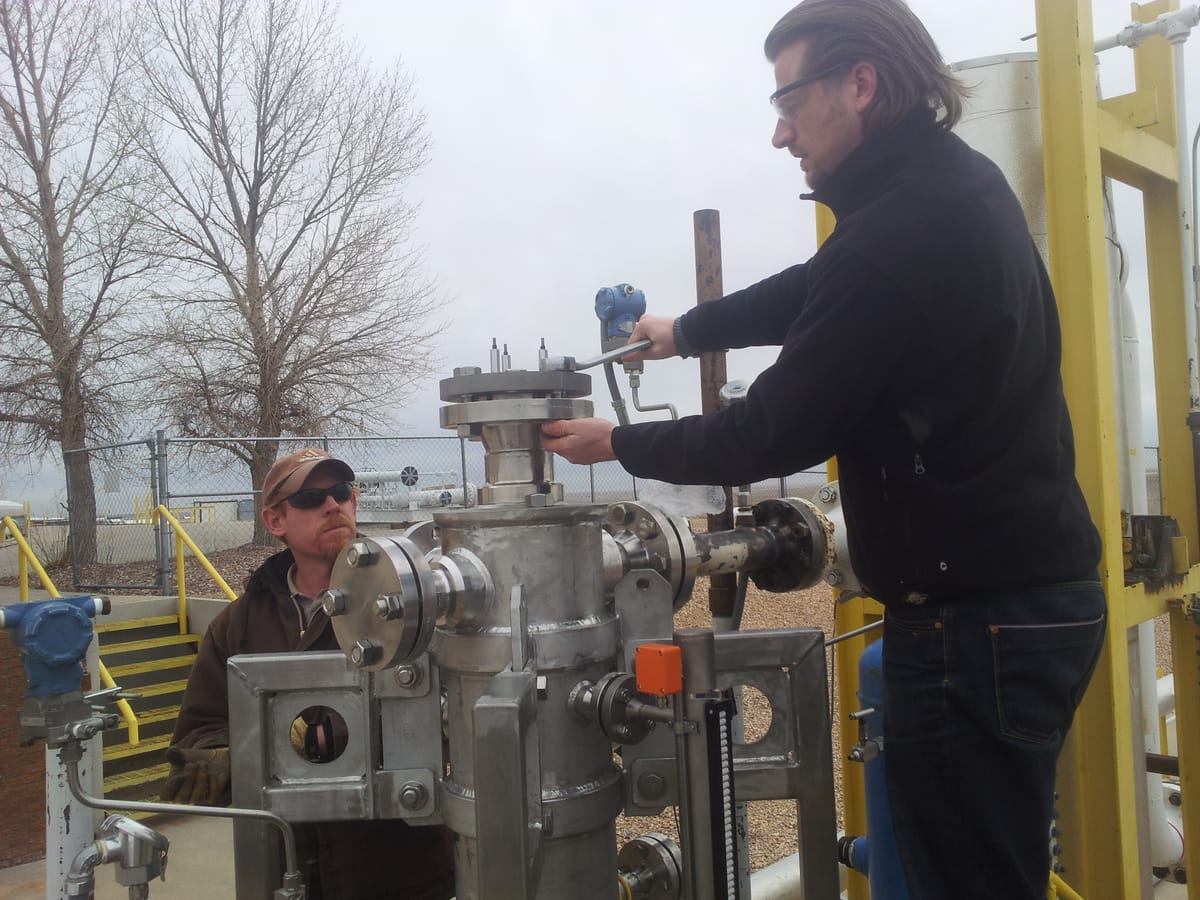
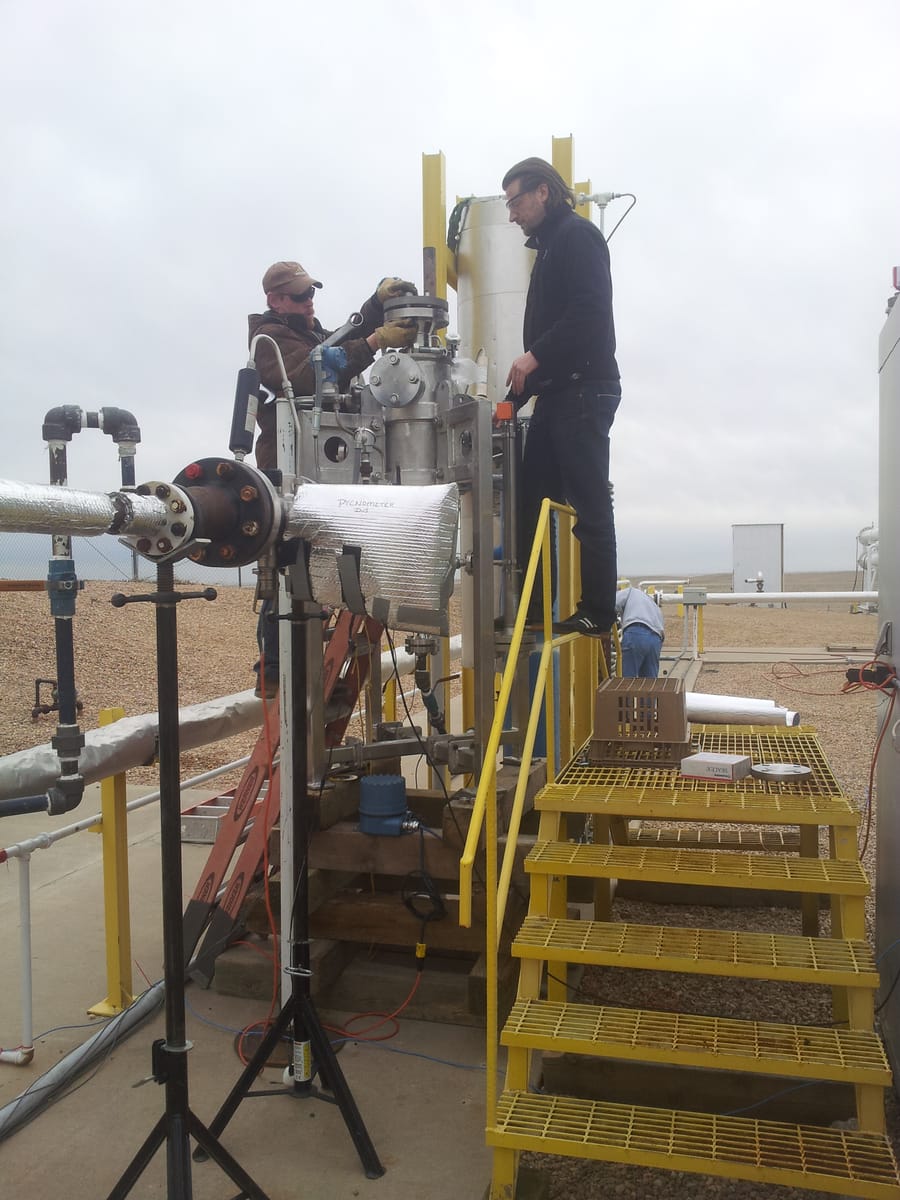
- The Lynx 250 was tested at the Statoil high pressure test facility at Rotvoll in Trondheim in the spring of 2016. Efficiency and K-factor were confirmed up to 90 bar, across variations in gas/liquid ratio and flow speed.
- Conventional gas/liquid separators lose efficiency steadily as pressure rises. The Lynx 250 qualified at less than a third of that reduction.
- The unit is PED certified. The certification was carried out at MOMEK in May 2015.
- The Lynx principle was tested with hydrocarbons up to 60 bar at CEESI in the USA in 2012. High pressure gas/liquid testing of the Lynx 250 was also carried out at CEESI.
- The Lynx separator was one of six innovations nominated for the Norwegian Tech Award in 2015, the prize formerly known as TEKNA's Ingeniørbragd. The other five were Zaptec, nLink, Bright Products, Norsk Titanium and eSmart Systems.
- InnSep presented the Rotvoll results and the first commercial application of the principle, for the Grane platform, at the TEKNA separation technology conference in Stavanger on 30 September 2016.
- InnSep invited operators to a joint industry project for a full scale pilot in October 2016, with the Norwegian Research Council and the DEMO 2000 programme.
- The separator was shown at ONS in Stavanger in 2016. Five retrofit cases were set out: after the main separator, in front of rotating equipment, in parallel for de-bottlenecking, as replacement internals, and as replacement of the main separator.
Evidence in the archive
- 24 September 2015Lynx Separator nominated for Norway’s Tech Award 2015
- 18 May 2016High pressure testing successfully completed and verified
- 2 June 2016InnSep stand at ONS 2016 – Hall 8, stand 850
- 30 August 2016Getting a grip on gas processing
- 30 September 2016TEKNA Separation Technology conference in Stavanger
- 2 October 2016Invitation to JIP for full scale pilot of Lynx 250 Separator
- 6 December 2016Record fast technology implementation of Lynx Scrubber
- 24 May 2023InnSep partner/royalty opportunities
Get in touch
Contact
This is the contact route for InnSep. For the Lynx Kitchen system, go to lynxkitchen.com.